Haarith Font: Blending Handmade Charm with Modern Design
When you're working on a project that needs to feel personal, warm, and genuinely crafted, the typeface you choose does more heavy lifting than most people realize. A font can set the emotional tone before anyone reads a single word. That's exactly where Haarith Font comes in. This handmade display typeface carries a contemporary, approachable personality that feels both intentional and effortless—a combination that's surprisingly hard to find in the world of digital typography.
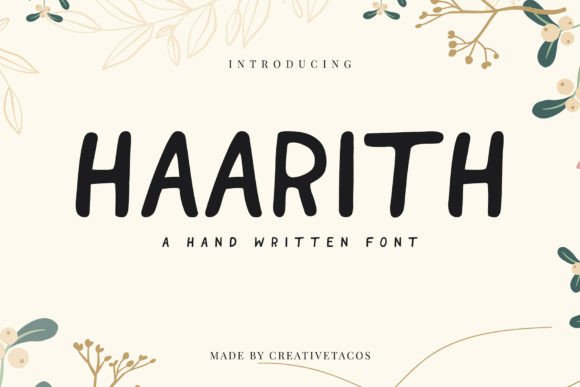
Haarith isn't trying to imitate traditional calligraphy or mimic rustic chalkboard lettering. Instead, it occupies a sweet spot between casual and polished. The letterforms have that unmistakable hand-drawn quality—slightly uneven baselines, organic curves, and subtle variations in stroke weight—but everything stays clean and legible. It reads as cute without being childish, modern without feeling cold. For designers, marketers, and creative professionals who need a font that communicates authenticity without sacrificing professionalism, that balance matters enormously.
What Makes Haarith's Visual Style Stand Out
The character set in Haarith Font covers all the practical bases. You get uppercase and lowercase letters, numbers, punctuation, and a solid range of symbols. Multilingual support is included, which opens the door for international projects and multilingual branding—something many handmade fonts overlook entirely. That attention to completeness tells you the designer behind Haarith understood real-world usage, not just aesthetic appeal.
Visually, the typeface leans into softness. The terminals round off gently. The letter spacing feels generous and relaxed, giving text room to breathe. There's a warmth baked into every glyph that makes it particularly effective when you want your audience to feel welcomed rather than marketed to. Think of the difference between a handwritten note from a friend and a printed corporate memo—Haarith lives firmly in the first category, but with enough structure to work in professional contexts.
Where Haarith Font Truly Shines
Understanding where a font performs best saves you time and prevents mismatched design decisions. Haarith Font excels in projects where personality and human connection are priorities. Here's where it fits naturally:
- Logo design and brand identity for small businesses, boutiques, artisan products, and lifestyle brands that want to feel approachable and handcrafted.
- Packaging design, especially for food products, cosmetics, candles, handmade goods, and anything sold at farmers' markets or on platforms like Etsy.
- Social media graphics where you need text that stops the scroll—quotes, announcements, Instagram stories, and Pinterest pins benefit from its visual distinctiveness.
- Invitations and greeting cards for weddings, birthdays, and events where a personal touch is expected.
- Editorial design, including magazine headings, blog post titles, and book chapter openers that need to feel warm yet contemporary.
- Web design, particularly for hero sections, call-to-action headlines, and landing pages targeting audiences who value authenticity.
- Advertising and posters where display text needs character without overwhelming the overall layout.
That said, Haarith isn't the right choice for body copy or long-form reading. Its handmade nature works against sustained readability at small sizes. Use it strategically for headlines, short phrases, and accent text, then pair it with something more neutral for paragraphs.
How the Right Typeface Shapes Audience Perception
Every design choice you make sends a signal. When a potential customer sees Haarith Font on your product packaging, they're absorbing more than words—they're forming impressions about your brand's values, quality, and personality. A handwritten font like Haarith suggests care, individuality, and a human touch. It tells people that something was made thoughtfully, not mass-produced on autopilot.
This matters for visual hierarchy too. A bold, expressive display font at the top of a layout draws the eye immediately, establishing what's most important. Haarith handles that role well because its personality is strong enough to anchor a design without requiring decorative additions or excessive styling. Pair it with a clean sans serif font for supporting text, and you've got a readable, visually dynamic composition that guides the viewer naturally from headline to body.
Consistency across touchpoints is another consideration. If you're building a brand identity, using Haarith Font across your logo, website headers, social templates, and printed materials creates a recognizable visual thread. People start associating that specific lettering style with your business. Over time, that recognition builds trust and recall—two things every brand needs.
Practical Tips for Working with Haarith
Before committing to any premium font for a project, test it in context. Set your actual headlines and key phrases in Haarith Font rather than relying on specimen previews alone. Check how it looks at different sizes, on different backgrounds, and alongside your chosen imagery. A font that looks stunning in isolation can sometimes clash with specific color palettes or photographic styles.
Font pairing deserves deliberate attention. Haarith works beautifully alongside geometric sans serif fonts, clean serif fonts, and even simple monospaced typefaces. The contrast between its organic, handcrafted forms and a structured companion font creates visual interest while maintaining readability. Avoid pairing it with other script fonts or overly decorative typefaces—the result tends to feel cluttered and directionless.
Review the full character set before you start designing. Knowing what symbols, numbers, and multilingual characters are available helps you plan layouts more accurately and prevents last-minute surprises when a client requests international text support.
Licensing is another practical checkpoint. If you're using Haarith for commercial projects—client work, products for sale, paid advertising—make sure you've secured the appropriate commercial license. Using a creative font without proper licensing exposes you to legal risk, and it's a detail that's easy to overlook when you're excited about a design.
Making Haarith Work for Your Next Project
The best design assets are the ones that solve real problems without creating new ones. Haarith Font gives you a ready-made solution for projects that need handmade warmth, contemporary style, and reliable functionality. Whether you're a small business owner refreshing your brand identity, a marketer crafting social media campaigns, or a designer building out a client's packaging system, it offers genuine versatility within its intended scope.
Don't overuse it, though. A little Haarith goes a long way. Set your most important text in it—your headline, your logo wordmark, your hero message—and let quieter typography handle the rest. That restraint is what separates professional design from amateur enthusiasm. The font does its best work when it has space to breathe and a calm typographic partner to support it.
Ultimately, choosing a typeface is about fit. It's about asking whether this specific collection of letterforms communicates what your project needs to communicate to the specific people you're trying to reach. For work that values authenticity, creativity, and a distinctly human feel, Haarith Font deserves a serious look. It's a modern typography tool built with genuine craft—and in a landscape full of generic options, that makes all the difference.