Mickey Girly Regular Font: Playful Cartoon Typography
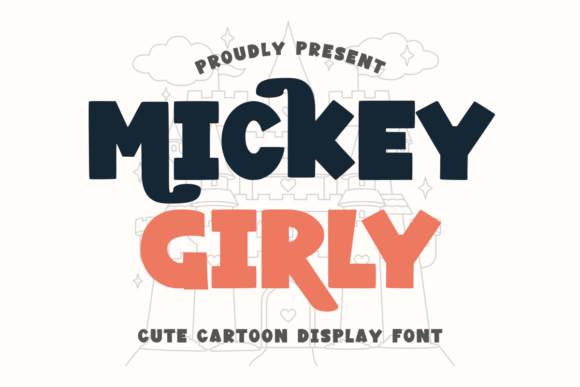
If you’ve ever struggled to find a typeface that captures pure, unadulterated joy without looking amateurish, you know the challenge. Many display fonts lean too far into novelty, sacrificing legibility for style. Others are so stiff they suck the fun right out of a design. Enter Mickey Girly Regular Font. This isn't just another cute typeface; it's a carefully crafted tool for injecting personality into your work. The visual style is immediately recognizable: bold, chunky letterforms with a distinctly bubbly personality and quirky curves. It walks that perfect line between playful and polished, making it a versatile asset for a wide range of projects.
More Than Just a Cute Face
At first glance, the Mickey Girly font feels celebratory. Its solid structure ensures it doesn’t collapse under the weight of its own exuberance. This is crucial. A font that’s all whimsy and no substance becomes a liability in professional settings. Here, the design maintains excellent readability even at smaller sizes, which is a hallmark of a well-made premium font. The stylistic contrast mentioned in its description—the interplay between "Mickey" and "Girly"—isn’t just a naming convention. It hints at the font’s dual nature: it has the bold, recognizable impact needed for a headline, yet carries a softer, more approachable charm in its details. This makes it far more interesting than a standard, one-note cartoon display font.
For a brand identity, particularly one targeting family-oriented products, children's services, or the hobby and craft market, this font can become a cornerstone. Imagine it on a logo for a children's party planner or a boutique toy store. The Mickey Girly typeface instantly communicates a specific vibe: fun, trustworthy, and creatively energetic. It does the heavy lifting of setting a brand's emotional tone before a single word of copy is read. In packaging design, it can make a product jump off the shelf, creating an immediate connection with both kids and the adults making the purchase.
Finding the Right Context for Its Charm
Knowing where to deploy a creative font like Mickey Girly is half the battle. Its strengths are magnified in specific contexts. Think about projects where clarity of tone is paramount. A birthday invitation set in this font practically shouts "celebration" from the envelope. Children’s book covers and chapter headings use its energy to draw in young readers. For school projects or educational materials aimed at younger audiences, it makes learning feel less formal and more engaging.
But its utility extends beyond strictly kid-centric applications. Consider a bakery's social media graphics announcing a new cupcake flavor, or a pet groomer's flyer for a summer special. The Mickey Girly Regular Font adds a layer of warmth and approachability that more austere serif fonts or generic sans serif fonts can't match. It’s a strategic choice for any small business owner or content creator aiming to project a friendly, accessible, and slightly whimsical persona. In the realm of web design, it should be used judiciously—perhaps for a hero banner headline or a special announcement—but when used correctly, it can define the entire user experience of a page.
Practical Guidance for Implementation
Adopting any new design asset requires a practical approach. First, evaluate the project's core need. Is the primary goal to be taken seriously, or to be seen as playful? Mickey Girly font excels in the latter. If you're working on a formal annual report or a luxury brand's minimalist website, this likely isn't your tool. But for a community newsletter, a local event poster, or a personal blog header? It’s a perfect fit.
Next, consider font pairing. A display font like this rarely works well with another equally loud typeface. The rule of thumb is contrast. Pair it with a clean, simple sans serif font for body copy. A geometric sans serif like Montserrat or a humanist one like Open Sans can provide a neutral, readable foundation that lets the headlines set in Mickey Girly shine without causing visual chaos. For a different feel, a very simple, understated script font could be used for a tagline, but tread carefully to avoid clutter.
Always check the licensing. If your project is commercial—whether it's a product you sell, a client's logo, or monetized content—you need to ensure you have the proper commercial font license. Most reputable font marketplaces make this clear. Reviewing the font family for included styles (like bold or italic versions) is also smart planning for creating a consistent visual hierarchy across a larger project.
A Final Thought on Readability and Personality
Ultimately, the success of using a font like Mickey Girly comes down to balance. Its strength is its personality, but that personality must serve the message, not overpower it. Test it in context. View it at the size it will be used, whether that’s on a mobile screen or a printed poster. Does it maintain its charm and legibility? Does it align with the brand's voice and the audience's expectations? When the answer is yes, you’ve found more than just a font—you’ve found a tool for storytelling. This modern typography choice isn't about following a trend; it's about strategically selecting a voice for your visual communication that is as unique and engaging as the project itself.