Sweet Heart Font: Infusing Romance into Your Designs
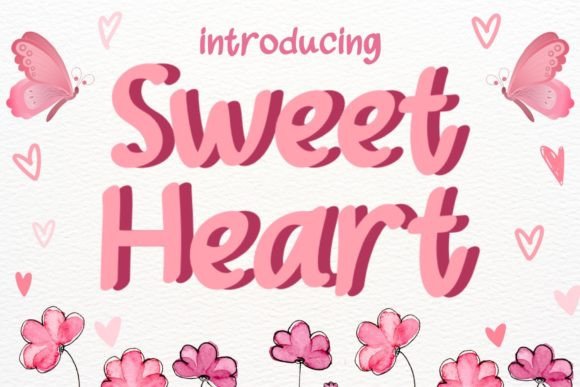
There's a particular challenge in design: conveying warmth and genuine emotion without sacrificing clarity. You want a typeface that feels personal, like a handwritten note, but remains professional enough for commercial use. Sweet Heart Font steps into that space beautifully. It’s not just another script font; it’s a carefully crafted display font designed to inject a dose of charm and affection into any project. Its flowing, connected letterforms mimic the natural motion of a skilled hand, offering an organic feel that rigid, digital fonts often lack. This handwritten font strikes a delicate balance—it’s playful enough for a children’s boutique logo yet elegant enough for a wedding suite.
The Anatomy of Sweetness: Visual Style and Appeal
At its core, Sweet Heart Font is defined by its gentle curves and rhythmic flow. The letters connect seamlessly, creating a sense of continuity and movement. You’ll notice subtle variations in stroke weight that add depth and authenticity, preventing it from looking flat or overly mechanical. This isn't a modern typography workhorse for body text; it’s a creative font meant to command attention in headlines, logos, and featured quotes. Its personality is undeniably romantic and cheerful, making it an excellent tool for projects that need to evoke positive, heartfelt emotions. When compared to a stark sans serif font or a traditional serif font, Sweet Heart offers a distinct emotional layer that can soften a brand’s visual identity.
Strategic Applications: Where Sweet Heart Truly Shines
Understanding where to deploy this typeface is key to leveraging its strengths. Its utility spans far beyond simple greeting cards, though that’s a natural home for it. Think about the first impression of a brand. For a florist, a wedding planner, or a boutique bakery, using Sweet Heart in the logo design immediately communicates the nature of the business. It tells a story of care, detail, and craftsmanship before a customer even reads the accompanying text. In packaging design, it can elevate a product from a mere commodity to a gift, especially when paired with complementary design assets like floral illustrations or soft color palettes.
In the digital realm, its application is equally powerful. Social media graphics thrive on personality. A quote overlay on an Instagram story or a Facebook ad headline using Sweet Heart can stop the scroll. It feels more intimate and less corporate than standard web fonts, which can significantly boost engagement for lifestyle brands and personal bloggers. For web design, it’s best used sparingly for hero text or call-to-action buttons to maintain fast load times and readability, but its impact in those moments is substantial. Even in editorial design, such as magazine pull quotes or chapter headings in a cookbook, it adds a human touch that draws the reader in.
Mastering the Pair: Readability and Font Hierarchy
A common pitfall with decorative fonts is overuse. Sweet Heart is a premium font best reserved for display purposes. Attempting to set a full paragraph in it would quickly fatigue the reader’s eye. The real magic happens when you practice smart font pairing. Its curvaceous, expressive nature makes it a perfect partner for clean, neutral typefaces. Imagine a wedding invitation where “Sarah & Michael” is set in Sweet Heart, while the event details are set in a clean, geometric sans serif font like Montserrat or a delicate serif font like Lora. This creates a clear visual hierarchy: the emotional hook (the names) draws the eye, while the practical information remains legible.
This principle of contrast is fundamental in modern typography. You are not just choosing two fonts; you are creating a dialogue between them. Sweet Heart handles the emotional heavy lifting, while its partner font ensures the message is delivered with clarity. This approach strengthens your brand identity by creating a system that feels both distinctive and functional. It shows intentionality, which builds trust with your audience.
A Practical Guide to Selection and Implementation
Before integrating Sweet Heart into your next project, a few practical checks are necessary. First, always test the font in context. Mock up a quick layout in your design software. How does it look at the intended size? Does the weight of the strokes hold up, or do they get lost? Second, investigate the character set. A robust commercial font will often include stylistic alternates, ligatures, and multilingual support. These features are invaluable. A stylistic alternate might offer a simpler ‘g’ or a more flourished ‘h,’ giving you creative control to tailor the font’s personality to the specific project. This is what separates a basic download from a professional design asset.
Licensing is another non-negotiable step. If you are using the font for a client’s logo, a product you intend to sell, or merchandise, you need a commercial license. Reputable foundries are clear about this. Using a font without the proper license is a risk no professional should take. Finally, consider the overall tone. While Sweet Heart is versatile within its romantic niche, it wouldn’t be the right choice for a fintech startup or a law firm. Evaluating project fit is about aligning the font’s personality with the brand’s message. When the alignment is right, Sweet Heart doesn’t just decorate a design—it elevates the entire brand identity, making it more memorable, engaging, and human.