Unleashing the Wicked Thistle Font
There is a specific moment in every design project where the typography needs to do more than just convey information; it needs to set a mood. If you have ever struggled to find a typeface that balances genuine spookiness with a hand-crafted, artisanal quality, you likely know the frustration of scrolling through endless generic options. Enter the Wicked Thistle Font. This is not just another display font; it is a character study in ink and texture, designed for creators who want their work to feel authentic, eerie, and undeniably compelling.
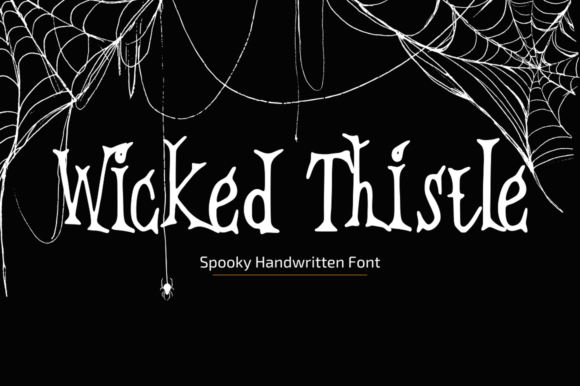
At its core, Wicked Thistle Font is a tall, vertical typeface defined by its irregular, hand-drawn strokes. Unlike digital fonts that rely on perfect symmetry, this premium font embraces the imperfections of the human hand. The jagged edges and haunting curves give it a personality that feels rooted in dark folklore and fairytales. It possesses a "chilling charm," a quality that makes it stand out in the crowded landscape of modern typography. For designers, this font solves the problem of finding a typeface that feels "scary" without looking cheap or cartoonish. It retains a high level of readability, ensuring that your message is not lost in the stylistic flourishes.
The Visual Language of the Font
To truly understand how to use Wicked Thistle Font effectively, one must look beyond the letters themselves and examine the visual language it speaks. The font’s structure is tall and somewhat narrow, which allows it to command attention in headers and titles without consuming excessive horizontal space. However, the defining feature is the "wickedness" of the strokes. The lines are not smooth; they are textured, mimicking the look of a pen pressed hard against rough paper. This texture adds depth and grit, making the font feel three-dimensional.
This creative font operates in a space between a serif font and a script font. While it is technically a serif due to the presence of small strokes at the ends of letters, the fluidity of its construction gives it a handwritten font feel. This duality is what makes it so versatile for thematic projects. It avoids the rigidness of a sans serif font, instead offering an organic quality that feels alive. When you use Wicked Thistle Font, you are injecting a sense of history and narrative into your design. It suggests a story is being told, whether that story is about a haunted house, a mystical potion, or a dark romance.
Strategic Applications for Modern Creators
For the entrepreneur or marketer, a font is a design asset, and like any asset, its value is determined by its application. Wicked Thistle Font shines brightest in scenarios where atmosphere is the primary goal. This makes it an exceptional choice for logo design, particularly for brands in the niche of alternative fashion, artisanal coffee, craft breweries, or fantasy gaming. A logo utilizing this typeface immediately signals to the audience that the brand is unique, hand-crafted, and perhaps a little rebellious.
In the realm of packaging design, this font creates an instant shelf presence. Imagine a small-batch hot sauce, a bar of dark chocolate, or a scented candle with "Midnight Woods" on the label. The Wicked Thistle Font elevates the product from a commodity to an experience. It tells the consumer that the contents inside are as carefully curated as the label on the outside. Because it functions as a commercial font with a strong personality, it reduces the need for excessive graphics; the typography itself becomes the focal point of the design.
Digital Presence and Editorial Design
While print is a natural home for this typeface, its impact in web design and digital media is equally potent, provided it is used with intention. In editorial design, such as magazine layouts or blog headers, Wicked Thistle Font serves as a powerful tool for visual hierarchy. Using it for main headers draws the reader's eye immediately, establishing the tone of the article before a single sentence is read. It is particularly effective for "Dark Academia" or gothic aesthetic blogs where the typography needs to match the written content's vibe.
For social media graphics, where stopping the scroll is the ultimate goal, this font offers high contrast. It stands out against the clean, minimal sans serif font styles that dominate platforms like Instagram and Pinterest. However, a word of caution is necessary here. Because Wicked Thistle Font is so stylistic, it should rarely be used for body copy on digital screens. The irregularities that look beautiful in a large print title can become visual noise when rendered at small sizes on low-resolution screens. Always pair it with a clean, neutral secondary font for body text to ensure your message remains accessible.
Mastering Font Pairing and Readability
One of the most critical skills in typography is knowing how to mix typefaces. Wicked Thistle Font demands a partner that complements without competing. Because it is a display font with high "visual noise," it pairs best with quiet, geometric sans serif fonts or classic, legible serif fonts. Think of it like a busy patterned suit; you want a solid, plain shirt underneath. A font like Montserrat or Open Sans provides the necessary breathing room for Wicked Thistle Font to do its work without overwhelming the viewer.
Readability is the non-negotiable metric of professional design. While Wicked Thistle Font maintains legibility for titles, you must consider the context. If you are designing a poster for a Halloween festival, the jagged, spooky nature enhances the message. If you are designing a menu for a high-end restaurant, you might need to increase the letter spacing (tracking) slightly to let the intricate details of the letters breathe. Testing your font pairing in the specific environment where it will be seen is crucial. Print a proof if it’s for packaging design, or view it on a mobile device if it’s for web design.
Practical Usage and Licensing
Before integrating Wicked Thistle Font into your brand identity, it is essential to understand the technical and legal framework of the asset. As a premium font, it typically comes with specific licensing agreements. Most commercial fonts distinguish between a "Desktop License" (for print, logos, and physical products) and a "Web License" (for embedding the font in a website’s code). If you are a small business owner, ensure you purchase the license that covers your specific usage. Using a font without the proper license can lead to legal headaches that no amount of good design can fix.
When evaluating the fit of Wicked Thistle Font for your project, look at the included styles. Does it come with alternate characters or ligatures? Many high-quality display fonts include these extras, allowing you to customize the look of specific letter combinations to avoid awkward spacing or repetition. This is particularly useful in logo design, where a unique ligature can make the mark feel truly bespoke.
Finally, consider the longevity of your design. Trends in modern typography come and go. While Wicked Thistle Font taps into the ever-popular "spooky" and "artisanal" trends, its hand-drawn quality gives it a timeless appeal that purely digital trends lack. It connects with the human desire for authenticity. By using this font, you are not just choosing a style; you are choosing to tell a story that resonates on an emotional level. Whether you are crafting a book cover, launching a clothing line, or designing an event invitation, this typeface offers a distinct voice that is hard to ignore.